We will broadcast real time self-adhesive label industry information for you
Abstract
If you’re tired of “missing” inventory that’s actually sitting in the wrong bin, manual counts that never match, or shipments that get delayed because someone can’t find a pallet fast enough, Rfid Labels can change the game. This article breaks down what Rfid Labels are, where they usually fail (and how to prevent that), how to choose the right label for your surfaces and environment, and how to roll out RFID step by step without disrupting daily work. You’ll also find a practical checklist, comparison tables, and an FAQ to help you make confident decisions.
Table of Contents
Most teams don’t wake up wanting “new technology.” They want fewer surprises. Rfid Labels help because they reduce the gap between what your system says and what’s actually happening on the floor.
Here are the pain points Rfid Labels typically solve:
The main value is simple: Rfid Labels can be read faster and more consistently, even when you don’t have perfect visibility of the label. That means fewer “we’ll fix it later” moments that slowly turn into expensive operational habits.
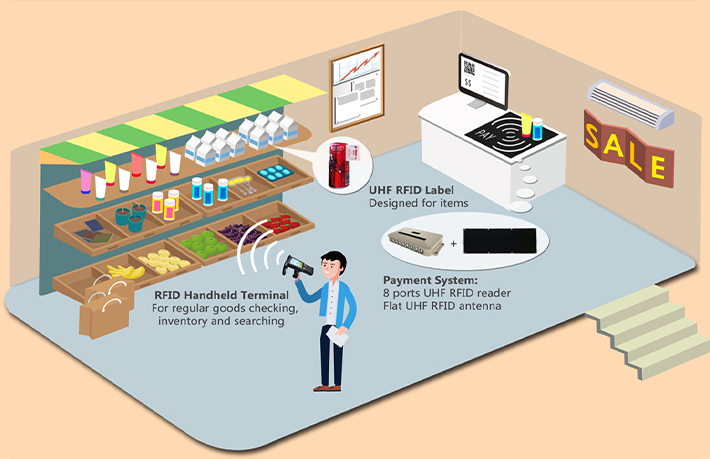
Barcodes are visual. They need a scanner to “see” them. RFID is radio-based. A reader sends energy (for passive tags), and the tag responds with its ID. That difference sounds technical, but operationally it changes how work gets done.
Practical differences you actually feel:
| Operational Need | Barcode Labels | Rfid Labels |
|---|---|---|
| Speed during receiving and put-away | Often slower; line-of-sight scan | Faster reads; less aiming and rescanning |
| Accuracy in busy environments | Relies on worker consistency | Can reduce missed scans and manual errors |
| Tracking WIP between stations | Usually manual scan points | Can be automated at key transitions |
| Handling dirty, wet, or scuffed conditions | Print can smear or become unreadable | Tag can still be readable if label is built for the environment |
| Item-level identity and traceability | Possible, but slower to capture consistently | Often easier to keep identity updated in real time |
A good rule: if your operation spends real money on manual scanning effort, “missing inventory,” rework, and poor traceability, Rfid Labels are usually worth evaluating.
RFID projects don’t fail because RFID “doesn’t work.” They fail because the labels and process weren’t matched to real conditions. If you want results, treat Rfid Labels like a materials-and-environment decision, not just an IT purchase.
Common failure reasons (and what to do instead):
A quick reality check you should run before committing:
Choosing Rfid Labels is about fit: fit to your surface, fit to your environment, and fit to your process. Below is a practical selection guide you can use without getting lost in jargon.
Selection checklist (use this in supplier conversations):
| Decision Factor | What to Ask | Why It Matters |
|---|---|---|
| Surface type | Is this for metal, plastic, cardboard, glass, or curved surfaces? | Performance can change dramatically by surface and placement. |
| Environment | Will it face moisture, freezing, heat, UV, oil, or abrasion? | Materials and adhesives must match real conditions. |
| Read method | Handheld only, or fixed readers at doors/lines? | Distance requirements affect tag and antenna choice. |
| Label durability | How many handling cycles should it survive? | Returnable containers and tools need tougher builds than cartons. |
| Printing and encoding | Do you need both visible print and RFID encoding? | Most operations still want human-readable info plus RFID identity. |
| Data standard | What ID format will you encode, and who owns the rules? | Consistency prevents duplicates, misroutes, and reconciliation pain. |
Use-case guidance you can apply immediately:
If you’re unsure, don’t guess—test. A short pilot with three or four label types can save months of frustration later.
The best RFID rollouts feel boring in the best way: minimal disruption, steady gains, and fewer exceptions. Here’s a practical plan most operations can follow.
A simple cost-to-value framing:
The supplier you choose impacts more than price. Label consistency, encoding quality, adhesive performance, and print durability affect daily operations. A strong supplier should act like a partner who understands your environment, not a shop that only ships rolls.
This is where a manufacturer like Guang Dong-Hong Kong (GZ) Smart Printing Co., LTD. can matter: you want a supplier that can support customization, stable quality, and practical guidance so the label performs the same way in the pilot and in month six of full rollout.
Supplier capabilities that protect your rollout:
Conclusion
Rfid Labels are not a “nice-to-have” when your operation is paying daily costs in manual scanning, mis-shipments, missing inventory, and weak visibility between handoffs. The winning approach is to match the label to your surfaces and environment, pilot in the messiest real conditions, standardize placement and encoding, then scale with confidence. If you want a smoother rollout, treat label selection like an engineering decision, not a guess.
Ready to make your tracking calmer, faster, and more accurate? If you’re evaluating Rfid Labels for cartons, pallets, assets, or industrial environments, reach out to Guang Dong-Hong Kong (GZ) Smart Printing Co., LTD. to discuss samples, practical label options, and a rollout plan—contact us to start the conversation.