


Abstract: Packaging decoration is no longer a post-production afterthought. A properly engineered In-Mould Label becomes part of the plastic itself during injection moulding, creating a bond that adhesive stickers cannot replicate. This comprehensive article examines how the technology performs under real-world conditions, where it fits best in modern product design, how it compares with pressure-sensitive alternatives, and why brand owners are moving decoration upstream into the mould. It also covers practical design rules, material compatibility challenges, sustainability considerations, and the detailed questions buyers ask most often before specifying an IML program. By understanding the mechanics of this process, manufacturers can significantly reduce defect rates, elevate brand perception, and create packaging that thrives in demanding environments.
Why In-Mould Label Technology Belongs in Durable Packaging
Most packaging decoration happens after the container exists. A cup is moulded, a jar is formed, and then a separate machine applies a sticker, sleeve, or wet-glue paper to the finished surface. That sequence creates a visible boundary between product and decoration—a boundary that eventually fails under heat, moisture, handling, or time. An In-Mould Label removes that boundary by moving decoration into the mould itself.
The printed film is placed against the cavity wall before molten resin enters. When the plastic fills the mould, the label’s compatible polymer surface fuses with the incoming melt. The result is not a sticker sitting on plastic. It is a decorated plastic part with no separable label layer, no adhesive line, and no exposed edge to catch a fingernail or a dishwasher cycle. This structural integration is what sets the technology apart from traditional post-mould decoration.
This distinction matters most in categories where packaging is reused, washed, chilled, stacked, and handled roughly. Cosmetic jars, food tubs, household storage containers, and industrial pails all punish surface decoration. An IML decoration survives because it is part of the wall, not an addition to it. When brand owners want their packaging to look pristine after months of use, the physical chemistry of IML provides a solution that surface-applied alternatives cannot match.
Fused, not adhered
The label and resin form a continuous structure during moulding, eliminating the adhesive interface where peeling and bubbling begin.
No liftable seam
Because the graphic is flush with the part surface, there is no edge for moisture, oil, or mechanical friction to exploit.
Protected graphics
The ink system sits beneath or within the film structure rather than on top of a removable facestock, preserving clarity through washing and wiping.
Decoration in the cycle
No separate labelling station, no liner waste, and no post-mould adhesive application step inside the production cell.
The shift is architectural, not cosmetic. Once decoration is designed as part of the moulded component, the entire production sequence changes: quality checks move earlier, defect sources narrow, and the finished part leaves the cell already decorated. For high-volume programs with stable artwork, that integration is a structural advantage. It reduces the dependency on secondary suppliers and tightens the feedback loop between design and finished part, ensuring that what is seen on a screen is exactly what emerges from the tool.
How the Bonding Process Actually Works
Injection IML follows a precise sequence, and each step creates conditions that determine final quality. Understanding the sequence helps explain why label construction, mould design, and resin choice cannot be treated as independent variables. In a modern manufacturing environment, these elements are deeply intertwined.
- Label preparation: A pre-printed film—typically polypropylene-based for PP containers—is cut to the correct geometry with the right stiffness and antistatic behaviour for automated handling. Static electricity is carefully managed so the labels do not stick together or attract dust during the robotic pick-and-place operation.
- Placement in the cavity: A robot or high-speed handling system positions the label against the mould wall. Vacuum channels, electrostatic charge, or a combination of both hold it in place while the mould closes. Placement accuracy must often be measured in fractions of a millimetre to avoid flashing or wrinkling.
- Resin injection: Molten plastic enters the cavity and contacts the back of the label. The heat and pressure cause the label’s compatible surface layer to soften and fuse with the incoming polymer. The injection speed and melt temperature are critical; too cold, and the bond is weak; too hot, and the label may distort.
- Cooling and ejection: The part cools with the decoration integrated into its surface. The label cannot be separated without damaging the part because there is no adhesive layer to release. The cooling time must account for the thermal mass of both the resin and the label film.
The bonding mechanism depends on polymer compatibility. A polypropylene label paired with polypropylene resin creates a strong, homogeneous interface. Mismatched materials can still produce a functional part, but the bond quality and recycling profile change. This is why material selection for an In-Mould Label must be specified alongside the container resin, not after the mould is built.
Process windows also matter. Injection speed, melt temperature, and cavity pressure influence how completely the label wets out against the resin. If the label is too stiff, it may not conform to curved geometry. If it is too thin, it may distort under flow. The label is not a passive graphic sheet; it is a process component with mechanical requirements. Machine operators must treat the label as a critical variable alongside the resin pellets and the tooling temperature.
Key point: The quality of an IML part is established before the mould opens. Placement accuracy, label flatness, and resin compatibility determine whether the decoration looks integrated or merely attached.
Durability Beyond the Surface: Scratch, Wash, and Wear
Adhesive labels fail at interfaces. The adhesive ages, plasticiser migrates, edges lift, and moisture finds a path underneath. IML avoids those failure modes because the decoration is not sitting on an interface—it is part of the wall. This fundamental physical difference translates into tangible benefits for products that are used in the real world.
Scratch and abrasion resistance
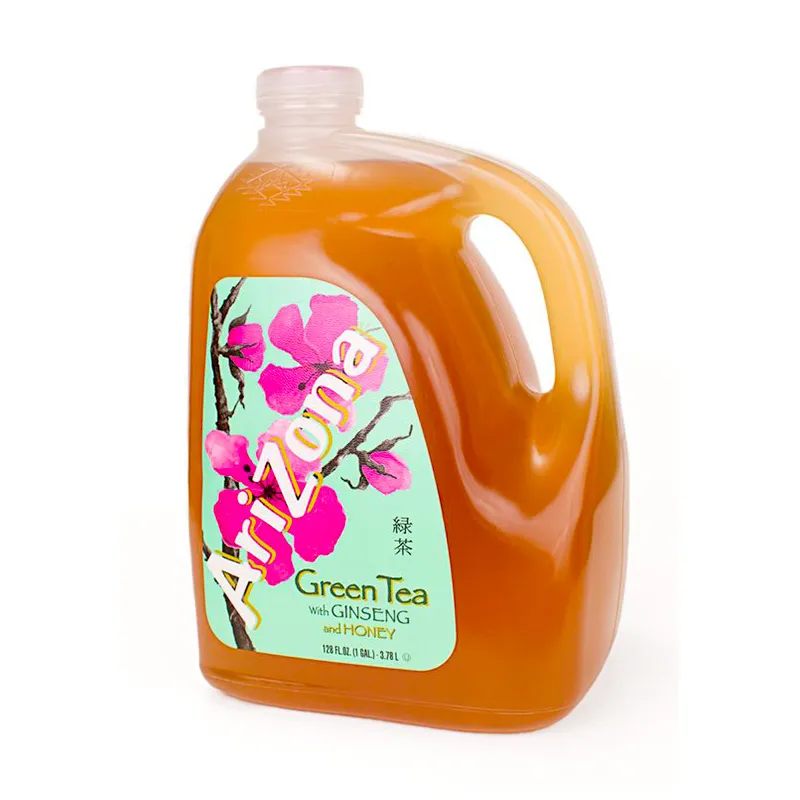
In a conventional sticker, the printed graphic is exposed on the outer face of the facestock. In IML, the printed layer is embedded within or protected by the film structure. Everyday contact with shelves, hands, and stacking surfaces is less likely to remove ink because there is no raised printed layer to abrade. Laminated or varnished IML constructions go further, adding a protective cover layer that maintains appearance through repeated cleaning. Even under harsh warehouse conditions, the graphic remains legible and vibrant.
Washing and moisture exposure
Reusable food containers and household articles are routinely washed. An adhesive label on a reusable tub is a predictable weak point: water penetrates the edge, the adhesive loses tack, and the label lifts. IML parts undergo dishwasher and high-pressure wash testing because the decoration is continuous with the container wall. The graphic remains intact because there is no adhesive bond to degrade. This makes IML a preferred choice for products intended for long-term domestic or commercial use.
Temperature and environmental stability
IML labels are formulated to withstand the thermal excursion of injection moulding, which is far more severe than typical service temperatures. Under normal indoor storage and use, the decoration maintains colour and structural integrity. As with any polymer system, long-term direct sunlight and extreme heat should be evaluated for the specific application, but the baseline stability is substantially higher than paper or general adhesive labels.
Chemical and oil resistance
Cosmetic jars and food containers often contact oils, creams, and cleaning agents. Because there is no adhesive layer to soften or dissolve, and no edge for liquids to wick beneath, the decoration remains stable under incidental chemical exposure. This is one reason IML is common in personal care and food packaging, where both appearance and hygiene matter. The chemical resistance of the film and inks can be tailored to the specific product being packaged.
- No edge lifting: The label cannot peel from a corner because there is no corner to lift.
- No bubbling: Trapped air and adhesive outgassing are eliminated by the fused construction.
- No glue residue: The surface remains clean and uniform, with no adhesive halo or migration.
- No print rub-off: The graphic is protected within the film structure rather than exposed on a facestock surface.
IML vs. Pressure-Sensitive Labels: A Practical Comparison
Pressure-sensitive labels remain a mature, flexible option for many packaging programs. The decision between IML and pressure-sensitive labelling is not a simple “better or worse” choice. It is a comparison of production architectures, durability requirements, and artwork stability. A thorough understanding of both systems is required to make an informed selection.
| Bonding mechanism | Label fuses with molten resin during moulding; becomes part of the plastic wall. | Adhesive bonds a separate facestock to the finished container surface. |
| Edge and seam | No edge; decoration is flush and continuous with the part. | Visible edge; adhesive line and facestock thickness create a seam. |
| Durability profile | Resists peeling, bubbling, moisture ingress, and print abrasion because there is no adhesive interface. | Performance depends on adhesive, facestock, surface preparation, and application conditions. |
| Production flow | Decoration happens inside the moulding cell; part leaves the cycle decorated. | Decoration happens downstream after moulding, requiring a separate labelling step. |
| Artwork flexibility | Best suited to stable graphics and longer production runs where artwork changes are infrequent. | Supports late-stage copy changes, promotions, and multi-SKU decoration on a common container. |
| Surface appearance | Seamless, “no-label look” with uniform reflectivity and no adhesive residue. | Raised label edge is visible; adhesive residue can remain if removed. |
| Recycling consideration | Mono-material PP label on PP container supports compatible recycling streams. | Adhesive and facestock can complicate separation and recycling depending on construction. |
The comparison makes the trade-off clear. Pressure-sensitive labelling keeps decoration downstream, which is valuable when copy changes frequently or when an existing container must be decorated without mould modification. An In-Mould Label program brings decoration upstream, which is valuable when durability, surface quality, and a seamless appearance are non-negotiable, and when the production program is stable enough to justify tooling and qualification.
Neither route is automatically more sustainable or more economical in every case. The right choice depends on container geometry, expected volumes, artwork variability, washing exposure, and the existing production footprint. A useful decision rule is to compare the two complete production systems over the life of the program, not the label price in isolation. Sometimes, a hybrid approach—using IML for the base container and pressure-sensitive labels for temporary promotional neck collars—can deliver the best of both worlds.
Design Rules That Prevent Costly Moulding Defects
IML failures are rarely caused by “bad printing.” They are caused by design decisions that ignore how film behaves inside a mould. The following rules address the most common sources of wrinkling, misregistration, and surface defects.
Wall thickness and label stiffness
Thin-wall packaging typically uses wall sections around 0.6–1.0 mm, while lids and closures may run 1.5–2.5 mm. Label stiffness must match the wall section: a label that is too stiff for a thin wall can bridge or wrinkle instead of conforming; a label that is too soft may fold during placement. For thin-wall containers, total label thickness is often kept at or below 80 μm to reduce sink marks and deformation.
Radii and corners
Sharp corners are difficult for a film to conform to without thinning or wrinkling. A minimum radius of approximately 0.5× the wall thickness helps the label wrap smoothly around the geometry and reduces flow shadows behind the label. Designers should avoid complex, highly irregular shapes if they want to maintain high yields and fast cycle times.
Bleed and safe zones
IML artwork requires bleed outside the trim edge because the label is cut before placement. Consumer packaging typically uses 3 mm bleed, while industrial sizes may require 5 mm. Critical copy should be kept away from the injection point and from areas where the label may shift slightly during moulding. A safe zone of at least 2 mm from the final trim line is highly recommended.
Minimum line width and text size
Fine detail behaves differently when printed on film and fused into plastic. A common guideline is a minimum line width of 0.15 mm, with minimum text sizes of 6 pt for positive print and 7 pt for negative print. Barcodes require a white background for reliable scanning and should be positioned away from high-distortion zones.
Colour and ink compatibility
IML labels are typically printed in up to eight colours, using CMYK and Pantone references. Ink adhesion and flexibility must be compatible with the label film and the moulding process. Colour at the injection point can shift because of resin colour and flow behaviour, so critical colour matches should be validated on moulded parts rather than on flat proofs alone.
Practical rule: Design the label and the mould together. Label geometry, retention features, and part geometry are one system. Treating the label as a print job separate from the tooling is the most common route to avoidable defects.
Where IML Delivers the Most Value Across Product Categories
The technology is not limited to one packaging format. Its value scales wherever the decoration must survive handling, moisture, or repeated use without compromising appearance.
Cosmetic jars and personal care containers
Premium cosmetic packaging depends on surface quality. A visible label edge or adhesive residue undermines the product’s perceived value. IML creates a smooth, seamless surface that supports high-definition graphics and metallic effects while resisting the oils and creams that contact the container in daily use. The luxurious feel of a seamlessly decorated jar often justifies the transition to IML.
Food containers and dairy tubs
Chilled and frozen food packaging exposes labels to condensation, temperature cycling, and handling. IML eliminates the adhesive edge where moisture collects and supports food-safe constructions. Mono-material PP systems allow the decorated container to enter compatible recycling streams, satisfying both brand sustainability goals and regulatory requirements.
Household and reusable storage products
Reusable containers are washed repeatedly. A pressure-sensitive label on a reusable product is a maintenance problem: it lifts, discolours, and eventually detaches. IML decoration is part of the container wall and remains stable through wash cycles, making it a better fit for products designed for repeated use. This is particularly important for high-end home organization products where aesthetics must endure.
Industrial pails, crates, and technical parts
Large-format IML parts benefit from the technology’s ability to carry brand information, handling instructions, and traceability elements directly on the moulded surface. Because the decoration cannot peel, it remains legible in environments where abrasion and chemical exposure are routine. Furthermore, embedding RFID tags or QR codes during the IML process provides tamper-evident tracking solutions for industrial logistics.
Surface perfection
Seamless graphics and metallic finishes support premium shelf presence without edge lines or adhesive artifacts.
Hygiene and moisture
No adhesive edge for condensation to penetrate; compatible constructions support food-contact requirements.
Wash durability
Decoration remains intact through repeated cleaning because it is fused into the wall, not applied to the surface.
Traceability that survives
Variable data, barcodes, and RFID inlays can be embedded during moulding for durable identification.
Sustainability, Material Choice, and Recycling Streams
The environmental case for IML is strongest when the label and container share the same polymer family. A polypropylene label on a polypropylene container creates a mono-material package that can enter existing rigid PP recycling streams without a separation step. This is not a universal outcome—every material combination must be evaluated—but the design principle is clear: material harmony simplifies end-of-life processing.
IML also reduces secondary operations. There is no liner waste from a pressure-sensitive roll, no separate labelling step, and no adhesive chemistry to manage in the recycling stream. The decoration is applied during moulding, so the finished part leaves the cell with its graphic already integrated. For high-volume programs, that process consolidation is both an efficiency gain and a waste-reduction measure.
Material innovation is expanding the sustainability profile further. Certified renewable polypropylene resins, bio-based BOPP films, and mono-material constructions are moving from demonstration projects into commercial packaging. These developments allow brand owners to pursue recyclable, lower-impact decoration without sacrificing the surface quality or durability that IML is specified for.
An In-Mould Label program should still be evaluated on a case-by-case basis. Label thickness, ink chemistry, and container resin all influence recyclability. The most robust approach is to specify the label and container as a single material system and to validate the combination against the intended recycling stream before launch. Engaging recyclers early in the design phase can provide invaluable insights into the end-of-life reality of the chosen packaging format.
Frequently Asked Questions
What exactly is an In-Mould Label and how is it different from a sticker?
Are IML graphics resistant to scratching and washing?
Can IML labels withstand high temperatures or harsh environments?
Does IML work with thin-wall packaging?
Is IML a more sustainable labelling option?
What artwork changes are possible with IML?
Durable packaging decoration starts with a conversation about the container, the mould, and the surface the brand needs to deliver. Contact us to discuss how an In-Mould Label program can be evaluated for a specific product, material, and production environment. GH‑Printing works with brand owners and converters to align label construction, print quality, and moulding conditions from the start—so the finished part leaves the cell already decorated, already durable, and already ready for the shelf.
Start the Conversation