We will broadcast real time self-adhesive label industry information for you
Environmental responsibility is becoming an important consideration in ticket production as event organisers, transport operators, theme parks, and entertainment venues look beyond print quality and unit cost. A Ticket Label may be used for only a few hours or a single admission, yet large events can consume thousands or even millions of printed tickets. The choice of paper, coating, ink, and finishing materials therefore has a direct influence on resource consumption, production waste, and the environmental footprint of ticketing operations. FSC-certified paper, biodegradable substrates, BPA-free thermal paper, and water-based coatings are attracting attention because they offer manufacturers and buyers more options for responsible material selection.
However, an environmentally responsible ticket must still perform its essential job. It needs to carry clear information, remain readable during handling, support barcode or QR code scanning, and provide appropriate protection against counterfeiting. The challenge for manufacturers is to balance these practical requirements with material sourcing and end-of-life considerations. Guang Dong-Hong Kong (GZ) Smart Printing Co., LTD. combines ticket paper production, coating, printing, and converting capabilities to serve different ticketing requirements. Understanding the materials behind each product helps buyers make decisions based on actual use conditions rather than environmental claims alone.
1. Why Are Sustainable Materials Becoming Important in Ticket Manufacturing?
2. Which Environmentally Friendly Materials and Product Specifications Matter Most?
3. How Can Manufacturers Balance Environmental Performance with Ticket Security and Print Quality?
4. Conclusion: How Can Buyers Choose a More Responsible Ticket Solution?
The environmental impact of ticket manufacturing is closely connected to production volume. A small admission ticket may contain only a limited amount of paper, but a large festival, sports venue, transport network, or theme park can issue a substantial quantity in a short period. When the same purchasing decision is repeated across multiple events and locations, the cumulative use of virgin fibre, coating chemicals, inks, packaging, and energy becomes significant. This is one reason procurement teams are paying closer attention to the materials used in ticket production.
Traditional ticket specifications have often prioritised stiffness, printability, thermal sensitivity, and resistance to handling. Those requirements remain important, but they are no longer the only factors buyers consider. Event organisers increasingly need to explain their purchasing decisions to sponsors, venue operators, corporate clients, and visitors. Selecting responsibly sourced paper or a suitable lower-impact coating can form part of a broader sustainability programme, provided the claims are supported by documentation.
Paper sourcing is one of the most visible starting points. FSC certification provides a framework for tracing forest-based materials through an independently verified chain of custody. For buyers, this can help establish whether the relevant paper products originate from responsibly managed sources or other eligible material categories. It also gives procurement teams a more structured basis for requesting supplier documentation.
FSC certification should not, however, be confused with biodegradability. It addresses responsible sourcing and supply-chain traceability, not the complete environmental behaviour of a finished ticket. A paper ticket may contain coatings, adhesives, inks, laminates, or security elements that affect its recyclability or decomposition. Buyers should therefore assess the complete construction rather than treating one certification as proof that every component is environmentally harmless.
For our production planning, responsibly sourced paper is considered alongside the functional requirements of the finished ticket. Paper stiffness, surface smoothness, thermal response, and compatibility with the intended printing process all influence whether the material can perform reliably. A substrate that has a favourable sourcing profile but produces poor print contrast or frequent feeding problems may create additional waste during production and use.
Many tickets have a short service life. Admission passes may be discarded after an event, while some transport or gaming tickets are retained only until a journey or transaction is complete. This makes end-of-life planning particularly relevant. Biodegradable substrates can be attractive for applications where the material is expected to enter an appropriate biological treatment environment after use. Recycled paper can also help reduce demand for virgin fibre, depending on the source, processing method, and performance requirements.
Neither option is automatically suitable for every ticketing application. The material must withstand the mechanical and environmental conditions encountered before disposal. For example, a ticket exposed to moisture, friction, body oils, sunlight, or frequent handling may require a surface treatment or a more durable construction. Such additions can change the end-of-life characteristics of the finished product.
Buyers should ask several questions before approving a biodegradable or recycled ticket material:
The phrase 100 percent biodegradable should always be interpreted in the context of the tested material and its stated conditions. Decomposition rates can vary with temperature, humidity, oxygen availability, microbial activity, and the treatment environment. A biodegradable claim does not mean that a ticket will disappear quickly in a normal landfill, in seawater, or when littered outdoors. Clear technical documentation is more useful than a broad environmental statement.
Material selection can influence more than environmental reporting. It may also affect brand reputation, procurement eligibility, and the ability to meet customer sustainability requirements. Large event organisers and venue groups often work with suppliers across multiple regions. A consistent material policy can make purchasing decisions easier to document and communicate.
There are several commercial considerations:
Guang Dong-Hong Kong (GZ) Smart Printing Co., LTD. has operated in the thermal paper and pressure-sensitive label industry since 1993. Its published company profile describes an integrated operation covering coating, printing, and converting, with a 12,000-square-metre production site and customers in more than 60 countries. This manufacturing background is relevant because environmental material choices need to be evaluated alongside production processes, quality control, and the requirements of the final application.
There is no single material that makes every ticket environmentally preferable. The right choice depends on how the ticket is printed, how long it must remain readable, whether it is handled directly by visitors, and what happens to it after use. A thermal ticket for a high-volume admission counter has different requirements from a printed event pass that needs colour graphics and multiple security features. Buyers should compare the substrate, coating, printing method, and finishing as one complete specification.
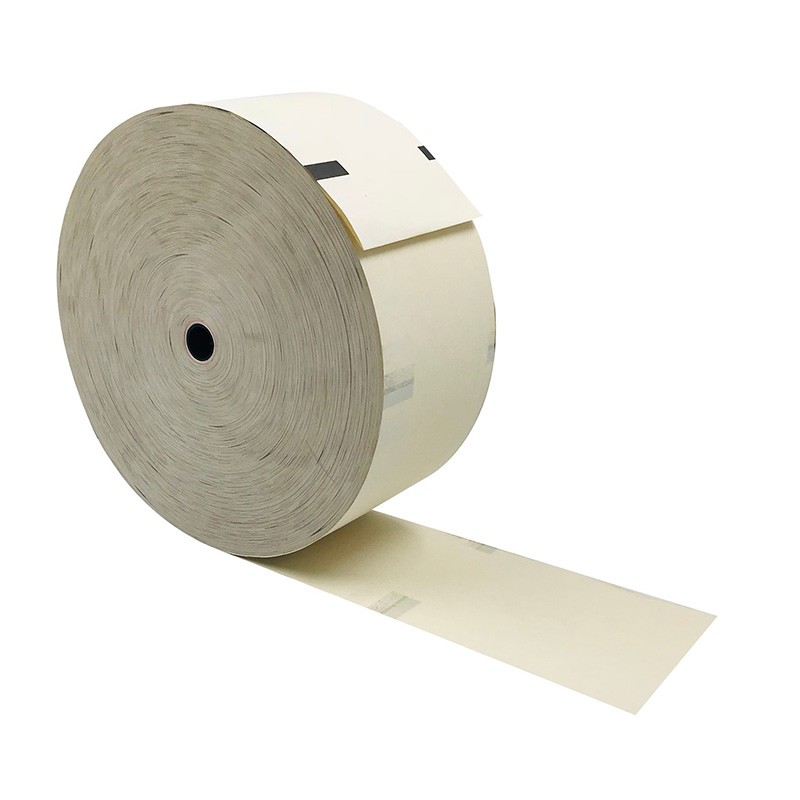
Paper-based substrates remain widely used because they can provide a practical balance of stiffness, printability, handling convenience, and cost. For thermal ticket applications, the surface coating must respond consistently to the printer's thermal head. Paper weight and stiffness also matter because a ticket that is too flexible may feed poorly through some ticketing equipment, while an unsuitable surface can affect print definition.
The published ticket product information includes high-gram thermal paper with good stiffness and BPA-free material options. The entrance ticket range identifies BAIQIANG TC series material, while the TITO ticket information identifies BAIQIANG NTC series. FSC-certified and recycled paper options are also presented in the company's ticket-related product information. Exact grammage, roll or sheet dimensions, and printer compatibility should be confirmed for the selected configuration rather than assumed to be identical across all orders.
Our material selection process needs to account for the intended ticket format and the printing equipment used by the buyer. A roll-fed ticket, a sheet-based admission voucher, and a ticket issued through a thermal terminal can require different converting and feeding characteristics. The substrate must be selected for the actual production and dispensing process.
Coatings protect the paper surface, influence print behaviour, and can affect resistance to handling or environmental exposure. In ticket manufacturing, thermal coatings are particularly important because they enable text and images to form when heat is applied by a compatible printer. Other surface coatings may be used to improve print performance or provide a particular finish.
Water-based coatings are receiving attention because they can reduce reliance on certain solvent-based formulations in suitable applications. However, the term water-based does not automatically mean that a coating is harmless, fully biodegradable, or recyclable in every paper stream. The complete formulation and the applicable test evidence matter.
The company's published ticket information states that its water-based coating complies with the EU EN 71-3 toy safety standard. This standard addresses the migration of certain elements from toy materials. It should not be described as a general environmental certification or as proof of complete biodegradability. Buyers should review the applicable test report, material scope, and product configuration when this requirement is relevant to their procurement specification.
Ink selection is another part of the material assessment. Ticket printing may require brand colours, event artwork, serial information, or security graphics. The chosen ink system should be compatible with the substrate and coating, while maintaining sufficient contrast for text and code scanning. A change to a lower-impact ink formulation should be validated through print testing rather than approved solely on the basis of its marketing description.
The product information available for this range covers several functional features. The following table summarises the published options and identifies where buyers should confirm project-specific details before ordering.
| Specification | Published product information | Buyer consideration |
| Substrate | High-gram thermal paper; FSC-certified and recycled paper options are listed | Confirm paper grade, grammage, stiffness, and sourcing documentation for the selected product. |
| Thermal paper material | BAIQIANG TC series for entrance tickets; BAIQIANG NTC series for TITO tickets | Confirm compatibility with the intended thermal printer and ticketing equipment. |
| BPA information | BPA-free material options are stated for the listed ticket products | Request product-specific supporting documentation where required by procurement policy. |
| Surface treatment | Water-based coating stated to comply with EU EN 71-3 | Review the relevant test evidence and do not interpret this as a general biodegradability certification. |
| Environmental claims | FSC sourcing, biodegradable substrate, ISO 14001 environmental management certification, and a stated 40 percent carbon-footprint reduction | Confirm the scope, certificate validity, baseline, assessment boundary, and product applicability of each claim. |
| Printing | Customised printing and full-colour printing options | Approve artwork, colour requirements, text legibility, and code readability through samples. |
| Anti-counterfeiting | Colour printing, barcodes, QR codes, and fluorescent anti-counterfeiting features | Choose security elements according to the ticket validation process and threat model. |
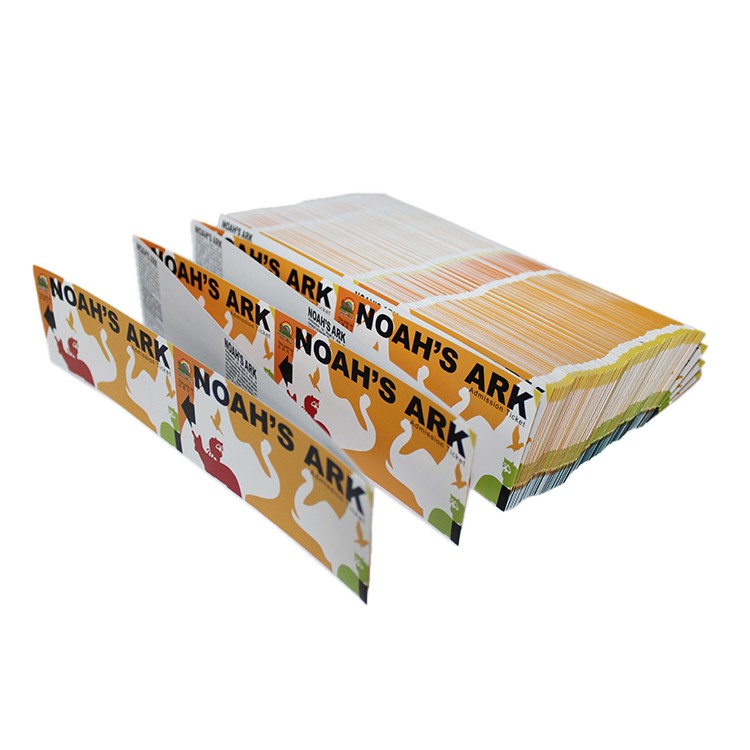
| Ticket formats | Entrance tickets and TITO tickets; TITO options are listed in books of 200, 400, and 600 | Confirm the required format, binding, dispensing method, and quantity per book. |
| Customisation | Custom design and printing according to customer requirements | Confirm dimensions, layout, variable information, finishing, and order specifications separately. |
These details show why environmental performance should be considered as part of the complete product specification. A paper ticket may use a responsibly sourced substrate but still require a coating or security feature that affects disposal. Conversely, removing a useful coating may reduce durability and increase the number of rejected tickets. The best material choice is the one that meets the operational requirement while avoiding unnecessary material use.
Environmental claims are most useful when they are specific and verifiable. FSC certification relates to responsible sourcing and chain-of-custody controls. ISO 14001 relates to an organisation's environmental management system, not the environmental performance of each individual product. A biodegradable claim relates to the tested material and the conditions under which biodegradation was assessed. These claims answer different questions and should not be used interchangeably.
The company's published product information also states a 40 percent reduction in carbon footprint. For a procurement decision, buyers should request details of the baseline, assessment period, product or process scope, and calculation method. Without this information, the figure should be treated as a manufacturer-stated claim rather than a universal reduction applicable to every ticket order.
Guang Dong-Hong Kong (GZ) Smart Printing Co., LTD. lists ISO 14001 environmental management certification as part of its environmental credentials. Buyers can ask for the current certificate and verify its issuing body, validity period, and scope. This helps distinguish a management-system credential from product-level evidence.
Environmental material selection cannot be separated from the basic purpose of a ticket. A ticket is a transaction record, an admission credential, or a means of controlling access. It may need to be scanned at a gate, checked by staff, retained for an audit, or validated through a ticketing system. If the material causes unreadable codes, blurred text, peeling security elements, or frequent printer jams, the operational consequences can outweigh the intended environmental benefit.
Manufacturers therefore need to evaluate the complete production sequence. This includes substrate preparation, coating, printing, converting, inspection, packing, storage, and final use. Material changes should be tested under realistic conditions before being adopted for high-volume production. A successful laboratory result is useful, but it does not replace verification on the customer's actual printing and ticket validation equipment.
Ticket fraud can create financial losses, overcrowding, disputes at entry points, and additional administrative work. A secure ticket may use multiple visual and machine-readable elements to make copying or unauthorised production more difficult. Common options include colour printing, barcodes, QR codes, and fluorescent security features. The challenge is to ensure that the chosen substrate and coating do not interfere with these elements.
For example, a barcode requires sufficient contrast and a clean print edge. If the paper surface absorbs ink unevenly or the coating affects thermal development, the code may become difficult for scanners to read. QR codes also depend on clear module definition and appropriate quiet zones. A ticket that looks acceptable to the human eye may still fail during automated scanning if the code is distorted or printed with insufficient contrast.
Fluorescent anti-counterfeiting elements introduce another compatibility consideration. Their visibility and verification depend on the selected ink or security material and the inspection method. Buyers should define how the feature will be checked, who will perform the inspection, and whether the feature needs to remain concealed during ordinary viewing.
Our approach to material evaluation should therefore include both visual and machine-based checks. Useful inspection points include:
It is also important to understand the limits of individual security features. A QR code can carry ticket information, but it does not by itself prevent copying or reuse. Stronger validation generally depends on unique ticket data, system-side verification, and a record of whether a ticket has already been used. Material and printing choices support the physical ticket, while the ticketing system determines how its digital identity is checked.
Material efficiency is not achieved only by changing the paper grade. Production planning, coating control, printing accuracy, and converting yield can all influence the amount of waste generated. When a manufacturer can reduce setup waste, avoid repeated print runs, and use material more efficiently, the environmental benefits can extend beyond the substrate itself.
Several production practices deserve attention:
At our factory, coating, printing, and converting are part of the company's integrated manufacturing operation. This allows material and process requirements to be considered together during production planning. The exact waste-reduction result will depend on the order structure, substrate, artwork, production run, and converting layout, so buyers should request project-specific information when environmental reporting requires quantified data.
A material change should be treated as a technical qualification exercise, not simply a purchasing substitution. Even when two papers have similar appearance and weight, they may behave differently during thermal printing, cutting, stacking, or storage. A structured sample approval process helps identify problems before a full production order is released.
Depending on the intended application, buyers can consider the following checks:
For tickets used in outdoor events, water parks, transport terminals, or other demanding environments, the buyer should also define the expected exposure. Moisture, heat, sunlight, friction, and handling frequency can affect paper and print performance. The term extreme-environment performance should be translated into measurable requirements for the actual application, such as a defined exposure test or acceptance criterion. No single material should be assumed to perform equally well in every environment.
Guang Dong-Hong Kong (GZ) Smart Printing Co., LTD. provides customised ticket printing options for different applications, including events, parks, theme parks, parties, and music festivals. When preparing a quotation, our team should receive the intended use, ticket format, printing requirements, estimated volume, security needs, and environmental documentation requirements. This information makes it easier to recommend a material construction that addresses both the operational and sustainability objectives.
A useful specification should be clear enough for suppliers to quote and technical teams to approve. Broad requests such as eco-friendly paper or green ticket printing are difficult to evaluate because they do not identify the performance or evidence required. A more effective specification separates the material requirement from the printing, security, and disposal requirements.
For example, a buyer preparing a ticket specification can define:
This approach reduces misunderstandings between procurement, marketing, operations, and manufacturing teams. It also helps prevent a common problem: selecting a material because it carries an environmental claim, only to discover that it is unsuitable for the ticket printer or access-control process. Sustainable purchasing works best when environmental requirements and functional specifications are agreed at the same time.
Environmentally friendly materials are gaining attention in ticket manufacturing because buyers are looking for better ways to manage paper sourcing, chemical use, production waste, and end-of-life considerations. FSC-certified paper, recycled substrates, biodegradable materials, BPA-free thermal paper, and suitable water-based coatings can all contribute to a more responsible material strategy. Their value, however, depends on accurate documentation and compatibility with the ticket's real operating requirements.
Guang Dong-Hong Kong (GZ) Smart Printing Co., LTD. brings together coating, printing, and converting experience with ticket options that include high-gram thermal paper, custom colour printing, barcode and QR code printing, and fluorescent anti-counterfeiting features. If you are sourcing tickets for events, venues, theme parks, or other high-volume applications, contact our team with your material preferences, ticket format, printing requirements, and sustainability criteria. We can help review the available specifications and develop a customised solution that balances reliable ticket performance with your environmental objectives.
A ticket material may be considered more environmentally responsible when its sourcing, manufacturing, use, and disposal characteristics are supported by relevant evidence. Examples include FSC-certified paper from a verified supply chain, recycled fibre, suitable biodegradable substrates, and coatings designed to meet defined chemical or environmental requirements. Buyers should assess the complete ticket construction, including inks, adhesives, coatings, and security features, rather than relying on a single material claim.
No. FSC certification primarily concerns responsible sourcing and chain-of-custody traceability for forest-based materials. It does not automatically prove that a finished ticket will biodegrade. Coatings, inks, adhesives, laminates, and other components can influence the end-of-life behaviour of the product. If biodegradability is a purchasing requirement, buyers should request product-specific test evidence that identifies the tested construction and the conditions under which biodegradation was assessed.
BPA-free thermal paper is relevant because thermal paper uses a heat-sensitive coating to form printed images without conventional ink or toner. Buyers who have chemical-content requirements may prefer paper grades that are specifically identified as BPA-free and supported by supplier documentation. BPA-free status should not be treated as proof that a material is completely chemical-free or biodegradable, so the relevant product declaration and any additional substance restrictions should be checked separately.
Yes, provided the paper surface and coating are compatible with the selected printing and security processes. QR codes require clear edges, sufficient contrast, and a suitable quiet zone for reliable scanning. Barcodes and fluorescent security elements also need to be validated using the intended printing and inspection methods. Buyers should approve production samples through both visual inspection and actual scanner or verification-device testing before placing a high-volume order.
Depending on the material claims and procurement requirements, buyers may request FSC chain-of-custody documentation, biodegradability test reports, coating or chemical compliance reports, BPA-free declarations, and a current ISO 14001 certificate covering the relevant manufacturing operation. For carbon-footprint reduction claims, request the baseline, calculation method, assessment boundary, and product or process scope. These documents help buyers distinguish independently verifiable evidence from general marketing statements.