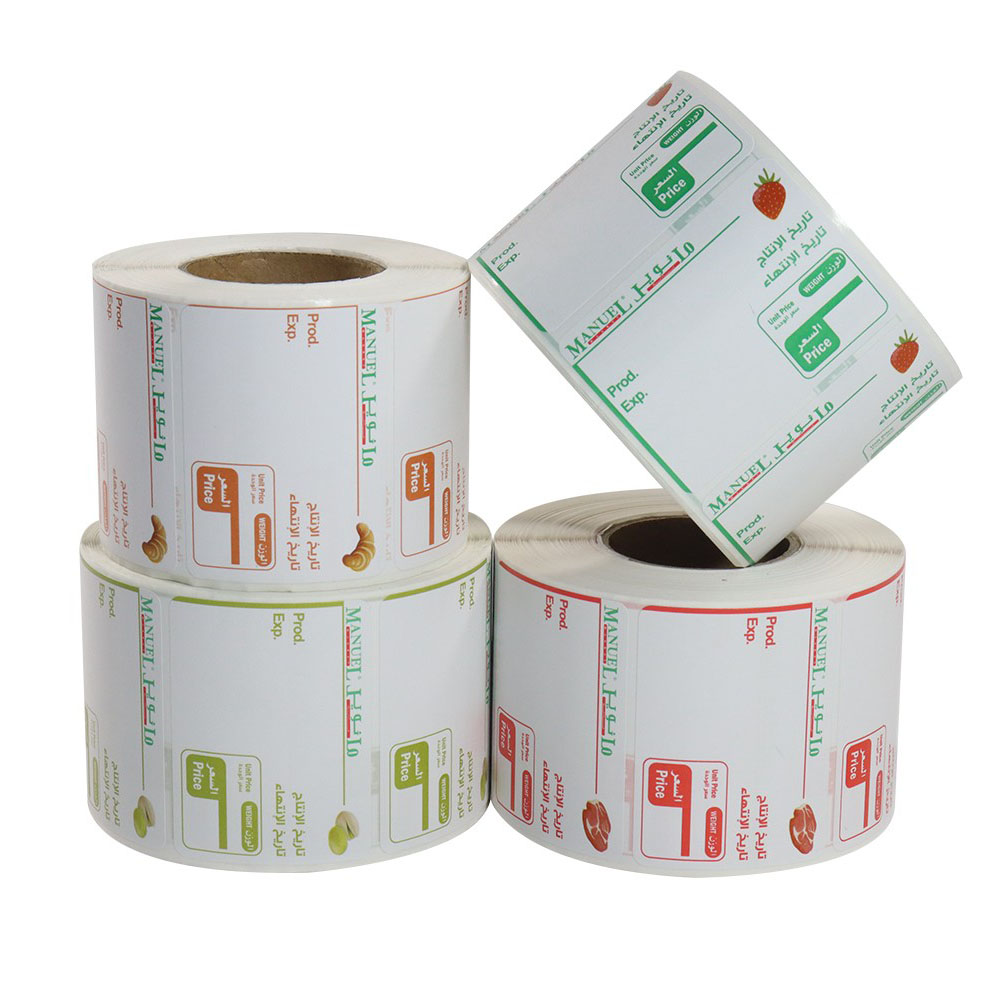
We will broadcast real time self-adhesive label industry information for you
Abstract
If you’ve ever lost money to mis-picks, missing inventory, slow receiving, or “we swear it shipped” disputes, you already know the real issue: visibility breaks down when data collection is manual and inconsistent. This guide explains how Rfid Labels close those visibility gaps by enabling fast, reliable item identification—without line-of-sight scanning. You’ll learn what to specify when buying labels, how to match materials to your environment, what to encode vs. print, and how to run a pilot that avoids the most common failure points. A practical checklist, decision table, and FAQ are included so you can move from confusion to confident purchasing.
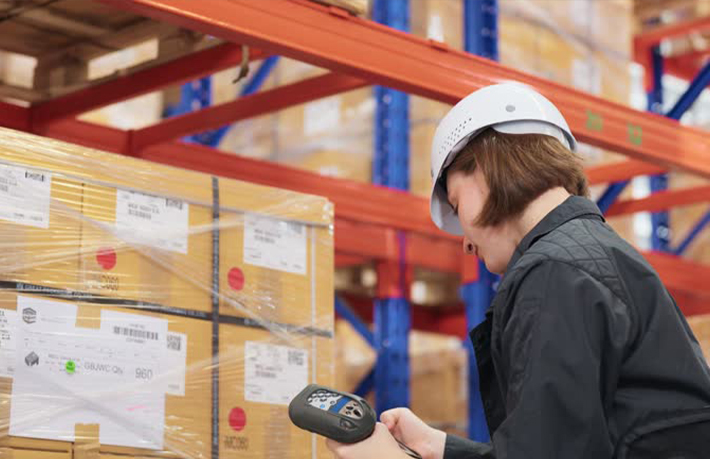
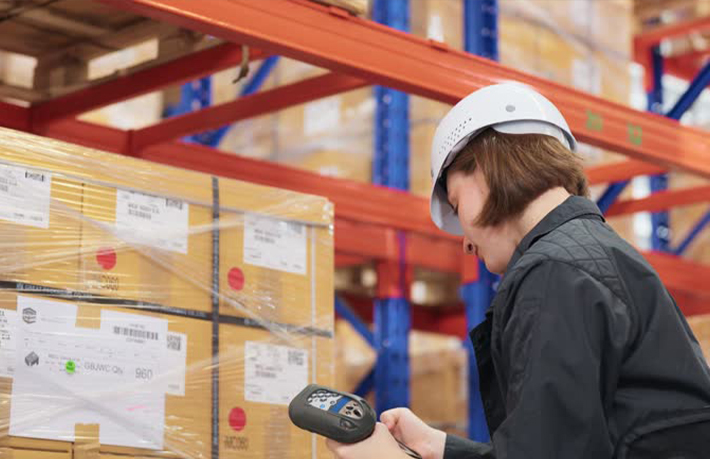
Rfid Labels are item identifiers that combine a printable label face (paper or film) with an RFID inlay (a tiny chip + antenna). Unlike barcode-only labels, RFID can be read without direct line-of-sight, which means you can identify items inside a carton, on a shelf, or moving through a doorway—often in bulk.
Think of RFID as a way to capture “who is here” fast, reliably, and repeatedly. It’s especially useful when the cost of being wrong is high: high-value inventory, fast-moving SKUs, regulated products, returns, work-in-progress, asset tracking, and any operation where scanning one-by-one slows everything down.
Reality check: RFID won’t magically fix messy processes. It shines when you pair it with good data discipline and a label spec that matches your environment.
If you’ve tried RFID before and it “didn’t work,” the cause is usually not the concept—it’s the mismatch between label design, item material, placement, and how reads are validated. The next sections help you avoid that trap.
Most teams don’t buy Rfid Labels because they’re trendy. They buy them because a few repeat problems quietly drain time and profit. Here are the pain points that show up across warehouses, retail, manufacturing, and logistics:
What changes with Rfid Labels?
The catch: to get these wins, you need a label that reads well on your items, in your environment, using your workflow. That’s a purchasing decision—not just an IT decision.
Buying Rfid Labels without a clear spec is like buying “tires” without mentioning the vehicle, road, or weather. Below are the practical variables that determine performance and total cost.
| Your scenario | Label face suggestion | Adhesive suggestion | Notes to avoid failures |
|---|---|---|---|
| High-volume cartons in warehouse | Coated paper or durable film | Permanent | Test read at dock doors and on stacked pallets |
| Freezer / cold-chain | Film (moisture tolerant) | Freezer-grade high-tack | Plan for condensation; validate after thaw cycles |
| Items with abrasion (bins, tools, WIP) | PET film or protective laminate | High-tack permanent | Consider overlamination or tag-in-label for longevity |
| Metal surfaces | Specialized construction for metal | Industrial permanent | Don’t “hope” standard inlays work—test on real items |
| Cosmetics / retail packaging | High-quality film or coated paper | Permanent or removable | Balance brand look, tamper evidence, and read consistency |
Practical tip: If you can, run quick tests on 20–50 real items (not “similar items”) using your intended reader setup. Performance that looks fine on a desk can fall apart at portals, on forklifts, or inside dense packaging.
One of the quickest ways to sabotage Rfid Labels is mixing up “human-readable needs” with “system-readable needs.” Your label should serve two audiences: people and software.
Encode (for systems)
Print (for humans)
If you operate in environments where RFID readers aren’t everywhere, printing a barcode/QR alongside RFID is a smart hedge: it keeps workflows moving if a reader is down or if a partner facility hasn’t adopted RFID yet.
Scaling Rfid Labels is where costs explode if you skip verification. A weak batch can create “ghost inventory” that takes weeks to unwind. Use this checklist before ordering at volume:
Don’t skip this: “It reads in the lab” is not the same as “it reads in the workflow.” Simulate real speed, real packaging density, and real operator behavior.
A good pilot is not a tech demo. It’s a controlled experiment that answers: “Will Rfid Labels measurably improve our process?” Here’s a clean, low-drama rollout path:
The fastest deployments focus on one painful bottleneck, win quickly, then expand. Trying to RFID “everything” on day one usually creates confusion and mixed results.
Your RFID outcome is only as strong as the weakest link in your label supply chain. Even with the right chip and antenna, poor converting, inconsistent printing, or sloppy serialization can create operational chaos.
A capable partner helps you do more than “buy labels.” They help you build a repeatable identification system: consistent materials, controlled production, reliable numbering, and practical verification steps.
What to look for in a supplier
If you want a partner that can support custom label formats and practical production execution, consider Guang Dong-Hong Kong (GZ) Smart Printing Co., LTD. as part of your vendor shortlist. The key is to match your operational requirements to a supplier that treats labels as a functional system component—not just a consumable.
1) Do Rfid Labels replace barcodes completely?
Not always. Many operations run hybrid labels: RFID for fast bulk reads and a barcode/QR as a backup for partners, exceptions, or areas without readers. Hybrid labeling often reduces risk during transition.
2) Why did our past RFID trial have inconsistent reads?
The usual causes are item material (metal/liquid), poor placement consistency, insufficient testing at real workflow speeds, or using a “general purpose” inlay that doesn’t match your environment. A tighter label spec and pilot design typically fixes this.
3) What information should we put into the RFID encoding?
Start with a unique ID that your systems can resolve reliably. Add more fields only if they support your workflow (traceability, WIP, location logic). Over-encoding can create downstream confusion if data rules aren’t consistent.
4) How do we know which label face material is right?
Paper is often fine for clean, indoor carton labeling. Film materials perform better under moisture, abrasion, chemicals, and long service life. Your environment should decide, not the unit price alone.
5) Are Rfid Labels safe around electronics or medical devices?
RFID systems are widely used across industries, but you should follow your facility’s compliance rules and test in your real environment, especially where sensitive equipment is involved. Vendor guidance plus controlled onsite testing is the smart approach.
6) What’s the biggest mistake buyers make when ordering at scale?
Scaling before locking the spec: item type, placement rules, read setup, and verification process. When you skip these, you risk large batches that “mostly work,” which is often worse than obvious failure because errors spread quietly.
7) Can we use the same Rfid Labels across multiple products?
Sometimes, but be careful. A label that reads perfectly on one package may struggle on another due to material, density, curvature, or placement constraints. Group products by similar characteristics and test representative samples.
8) What should we send a supplier to get an accurate recommendation?
Provide item photos, dimensions, surface material, packaging details, target read distance, environment conditions, placement preference, and your workflow (portal, handheld, conveyor). The more “real” the information, the more reliable the label proposal will be.
Rfid Labels aren’t just “better barcodes.” They’re a practical way to reduce blind spots in receiving, picking, audits, and traceability—when the label is specified correctly and validated in real workflows. If you treat RFID labeling as a system (materials + data + placement + verification), the results are faster operations, fewer disputes, and cleaner inventory truth.
Ready to choose the right label spec for your items and environment? Tell us your product surface, packaging, usage scenario, and target read distance, and we’ll help you narrow down a reliable solution. Contact us to start your sample plan and move from pilot to rollout with confidence.